The Cheapest Big Upgrade in the House — When It's Done Right
A ceiling is the largest uninterrupted surface in every room, and in Las Cruces it works harder than most: our low winter sun pours in sideways through south-facing windows and rakes across it, advertising every roller mark, sheen patch, and half-hidden water ring. Fresh, properly applied ceiling paint resets all of it — rooms get visibly brighter, smoke and candle haze disappears, and the whole interior reads cleaner without moving a stick of furniture. It's also the step that finishes every removal and repair project; a scraped and retextured ceiling isn't done until it's primed and painted evenly, corner to corner.
Why Ceiling Paint Is Its Own Skill
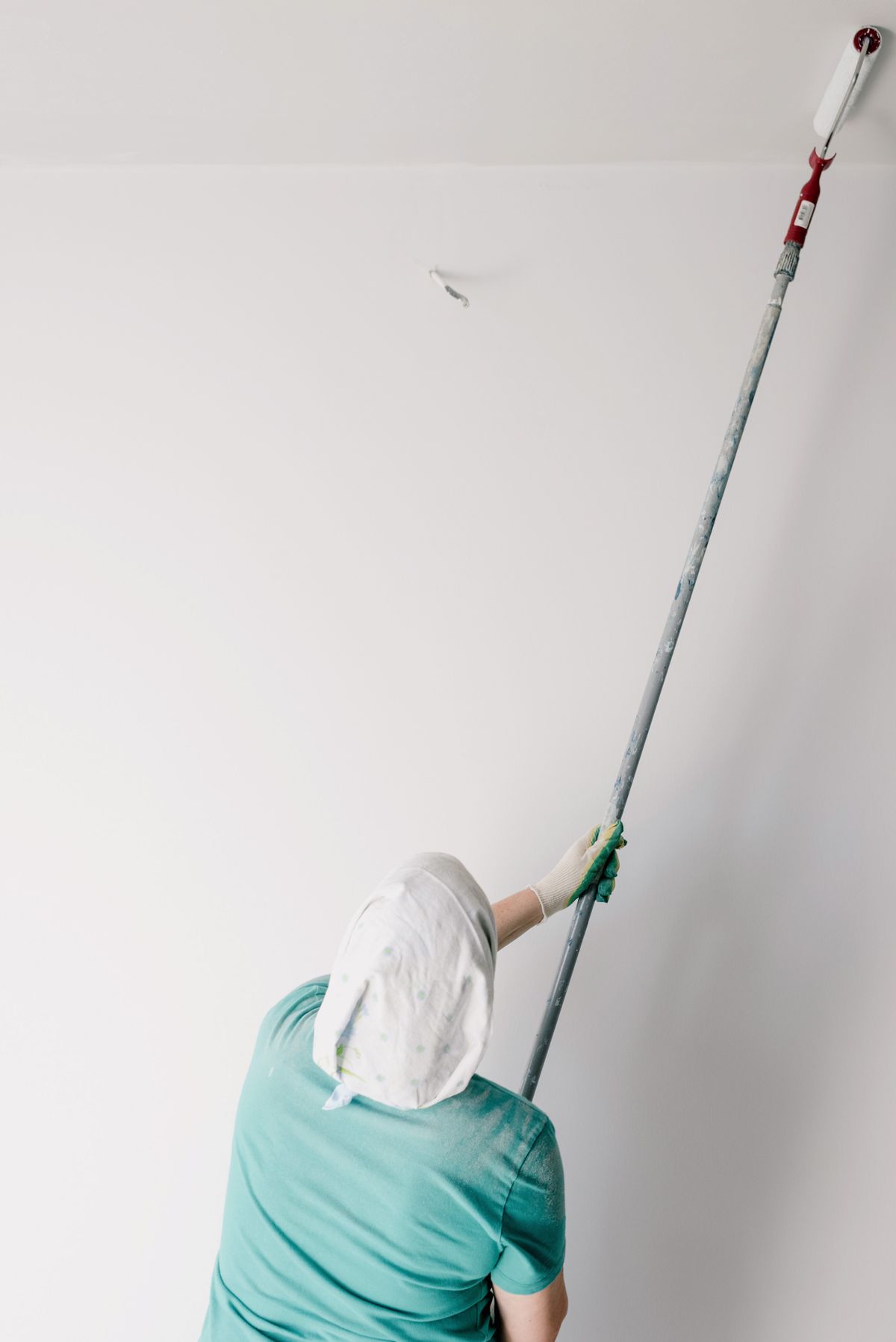
- Dead-flat sheen, applied evenly. Ceilings get flat paint precisely because flat hides. But flat paint shows lap marks if it's rolled inconsistently — keeping a wet edge across a 20-foot ceiling is the trick, and it's harder overhead than it sounds.
- Stain blocking before beauty coats. Water rings, soot shadows above candles and fireplaces, and old cooking haze all bleed through standard paint. Problem areas get a dedicated stain-blocking primer first — skipping it is why DIY ceilings show ghost rings six months later.
- Crisp lines where ceiling meets wall. Nothing betrays a rushed job like a wobbly cut line, especially against the colored walls common in Southwest interiors. Sharp, straight cut-ins are the signature of a professional ceiling.
- Texture-aware application. Knockdown and orange peel hold paint differently than smooth board; popcorn (tested, sound, staying put) practically requires spraying, because rolling can pull chunks of texture down with the nap.
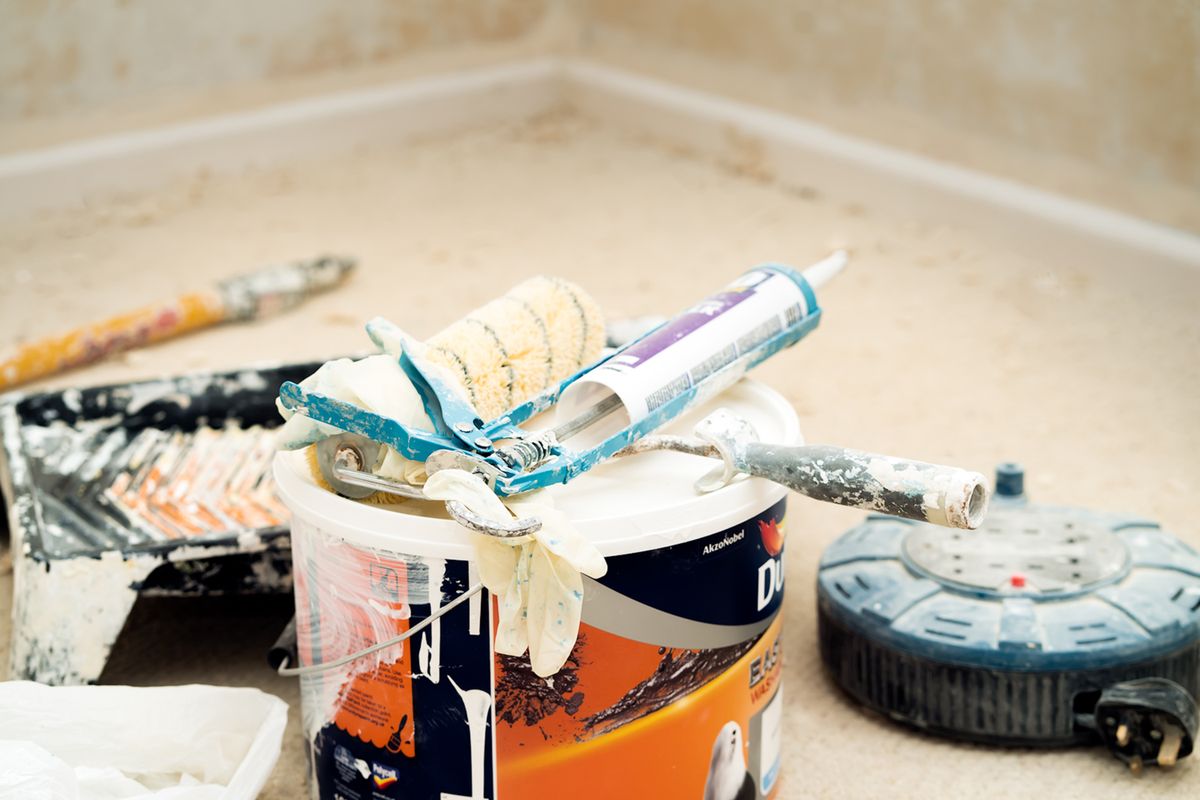
- Real prep and real cleanup. Fans dropped or bagged, walls masked, floors sheeted — then everything back in place. The paint matters; the not-painting-your-belongings matters just as much.
Choosing a Ceiling White in the Land of Warm Light
"Ceiling white" isn't one color. Under New Mexico's warm-spectrum daylight, a stark blue-white ceiling can look icy against adobe-cream walls and saltillo floors, while a softened warm white ties the room together and still reads as bright. The working rule: pull the ceiling color from the wall color — same hue family, several shades lighter — unless you're after a deliberate contrast. It's a two-minute conversation during your quote and it makes a surprising difference in how finished the room feels.
How a Ceiling Paint Job Runs
Protect and prep
Floors sheeted, walls masked to the cut line, fixtures and fans dropped or bagged, vents covered. Any nail pops, hairline cracks, or gaps at the wall line get filled and caulked now, because paint magnifies whatever it covers.
Spot-prime the history
Water rings, soot shadows, marker mystery spots, and repairs get stain-blocking primer; badly yellowed or previously patched ceilings get primed edge to edge.
Two even finish coats
Rolled in disciplined overlapping rows or sprayed and back-rolled, with drying time between coats — short in our climate, but never skipped.
Unmask and inspect in raking light
The final check happens the way the ceiling will actually be seen: lights on, low angle, no excuses. Then everything goes back where it was.
When Ceiling Painting Is the Whole Job
Not every ceiling needs surgery. If yours is already smooth or lightly textured but yellowed, scuffed, or ringed from a long-fixed leak, a prime-and-paint visit may be the entire project — a day or two, modest cost, dramatic change. It's also the natural finishing move after a repair, and the smart add-on while rooms are already masked for popcorn removal: painting a just-refinished ceiling costs far less than mobilizing for it separately later. Whatever the scope, the quote is free and itemized so you can see exactly where the money goes.
Ceiling Painting FAQs
Can painted popcorn just be painted again?
If it's sound, tested (for pre-1990 texture), and you're keeping it — yes, by spray, carefully. But each coat adds weight and further waterproofs the texture, making eventual removal harder and pricier. If you suspect the popcorn's days are numbered, remove first and paint once.
How many coats does a ceiling need?
Two finish coats over appropriate primer is the standard for an even, durable result. One-coat promises tend to look fine at noon and streaky at 5 p.m. when the low light arrives.
Do my walls have to be painted too?
No — walls get masked and cut lines stay crisp. That said, ceiling-plus-walls together is the best-value version of a room refresh since the prep overlaps almost entirely. Worth pricing both ways.
How soon can the room go back together?
Flat ceiling paint sets fast in our dry air — rooms are typically livable the same evening and fully cured within days. Summer swamp-cooler humidity slows things slightly; the schedule accounts for it.
What does ceiling painting cost on its own?
Standalone ceiling painting is priced by footage, height, and how much stain-blocking prep the surface needs — single rooms are a modest job, whole single-story homes usually stay well under what removal projects run. The quote is free and broken out line by line, so you'll see prep, primer, and paint separately.
Brighter Rooms by the Weekend
Whether it caps a removal project or stands alone, professional ceiling painting is a fast, affordable transformation — quoted free.